


The PHS is a plug and play module
The first version is
Designed for i3200 and i1600 printheads.
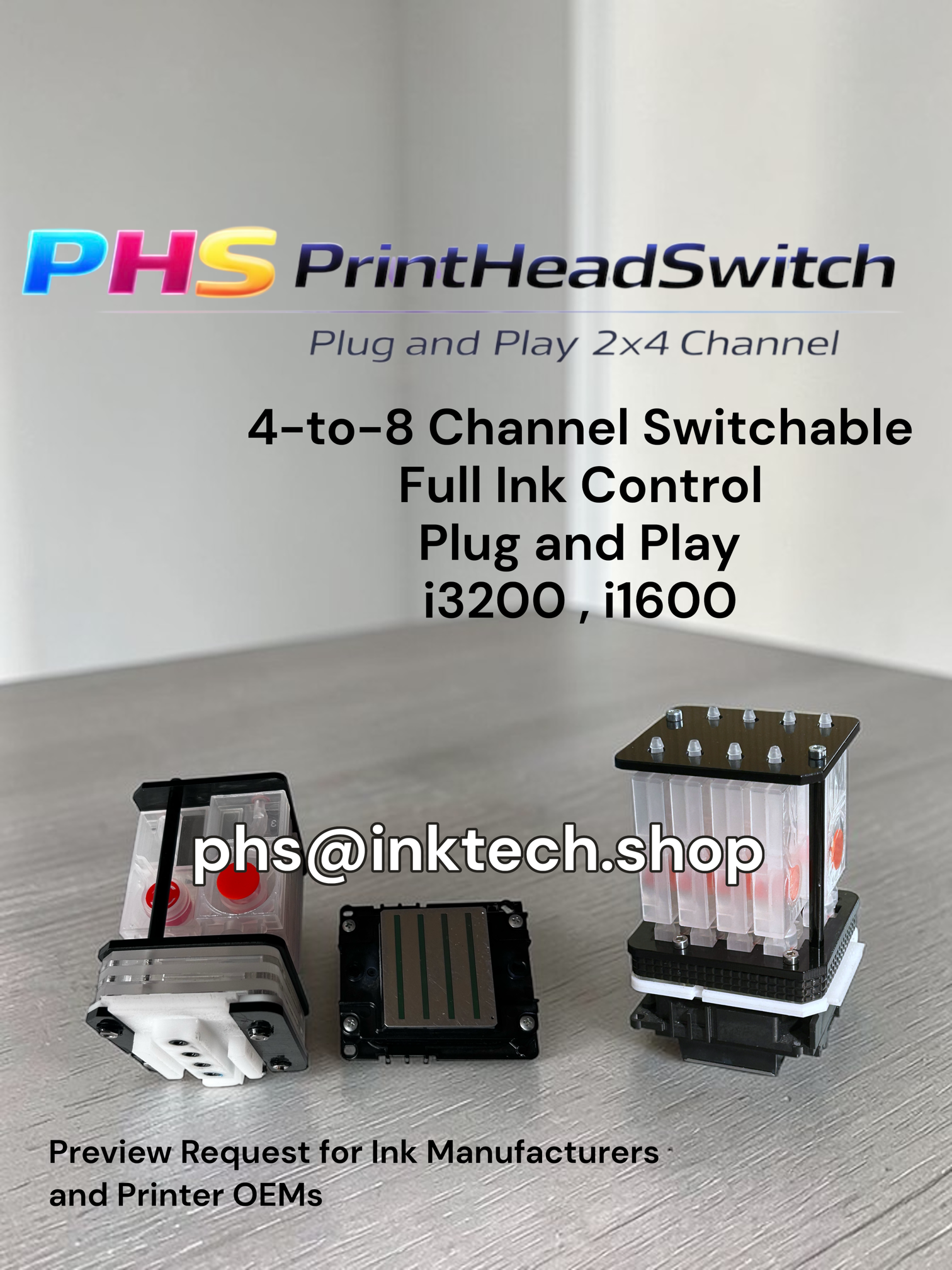
R&D departments, ink manufacturers, and OEM printer manufacturers already have the opportunity to familiarize themselves with the PHS before its official release.
Upon request, you will receive password-protected access to further images and videos.
The official release and market launch are planned and will be scheduled after the conclusion of discussions with interested parties.
NDA & Intellectual Property Notice:
The material provided is confidential and intended solely for internal evaluation. Any disclosure, reproduction, or technical analysis without written consent is prohibited.
The PHS is protected by a utility model.
DPMA File number DE: 20 2025 001 791.8
All content shown is subject to the relevant copyright law.
If you are interested, please contact me by email.
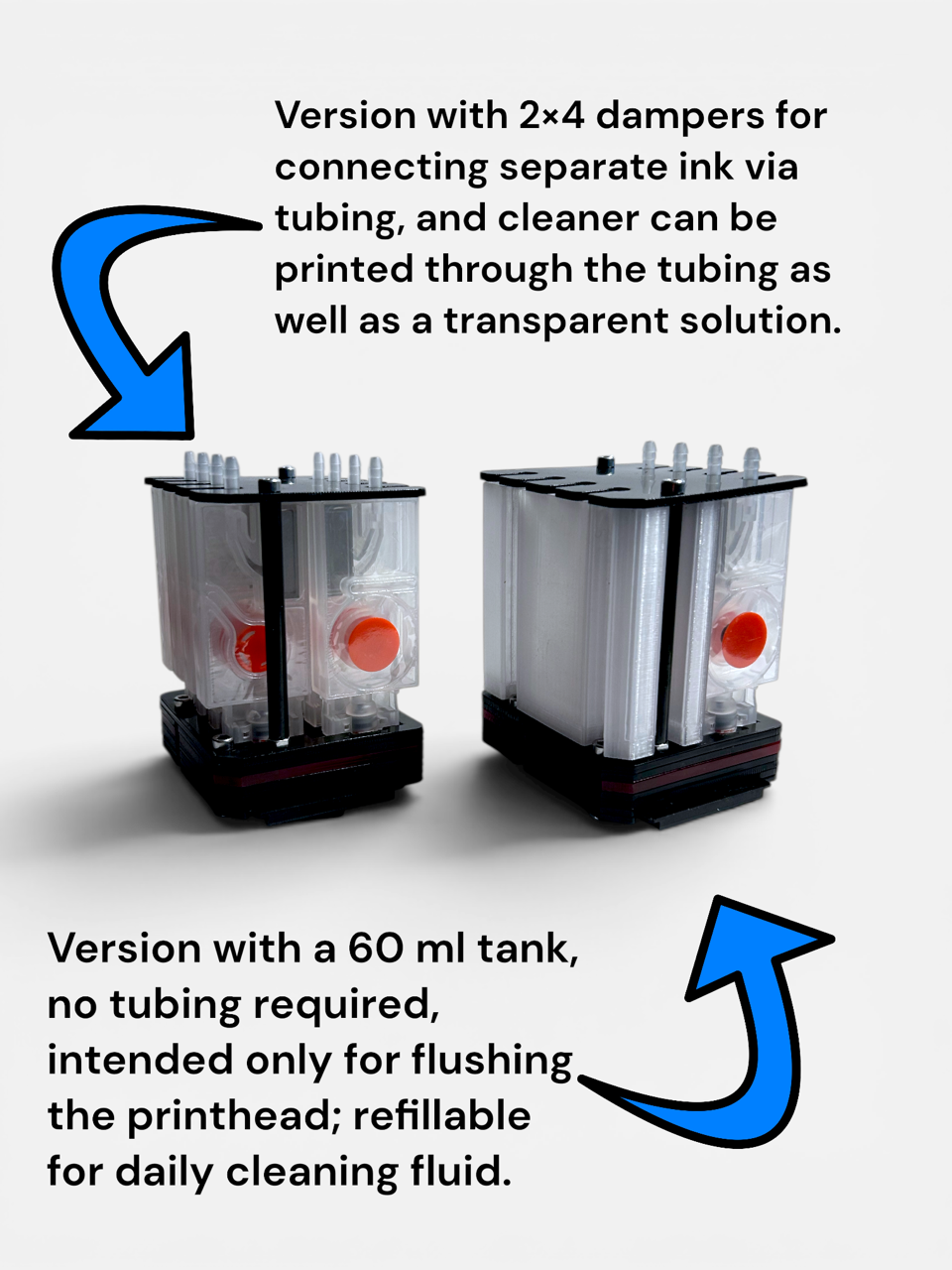
1️⃣ Platform Pitch
The PHS transforms many compatible printers into a hybrid production system that combines multiple inks, colors, and applications in one machine.
2️⃣ Technology Pitch
Through mechanically controlled ink switching, pressure-based cleaning and pigment-free process media, the PHS significantly reduces wear, downtime and operating costs.
3️⃣ Production Pitch
Manufacturers and users can flexibly switch between CMYK, white, neon, transparent and functional fluids – without interfering with electronics, software or machine architecture.
4️⃣ Business Pitch
The PHS creates a closed ecosystem of hardware, ink, and service that generates recurring revenue, fosters customer loyalty, and enables industrial scalability.
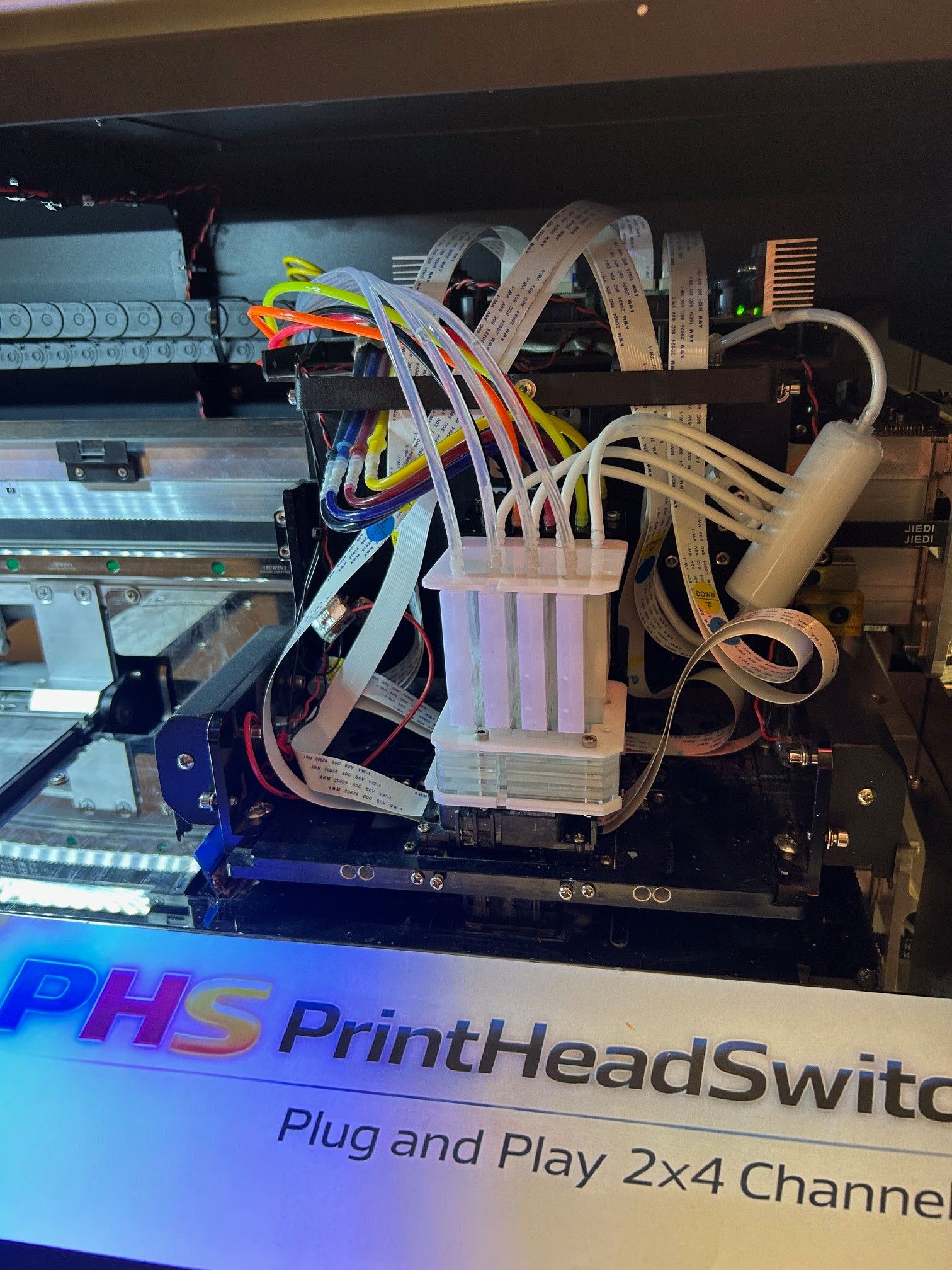
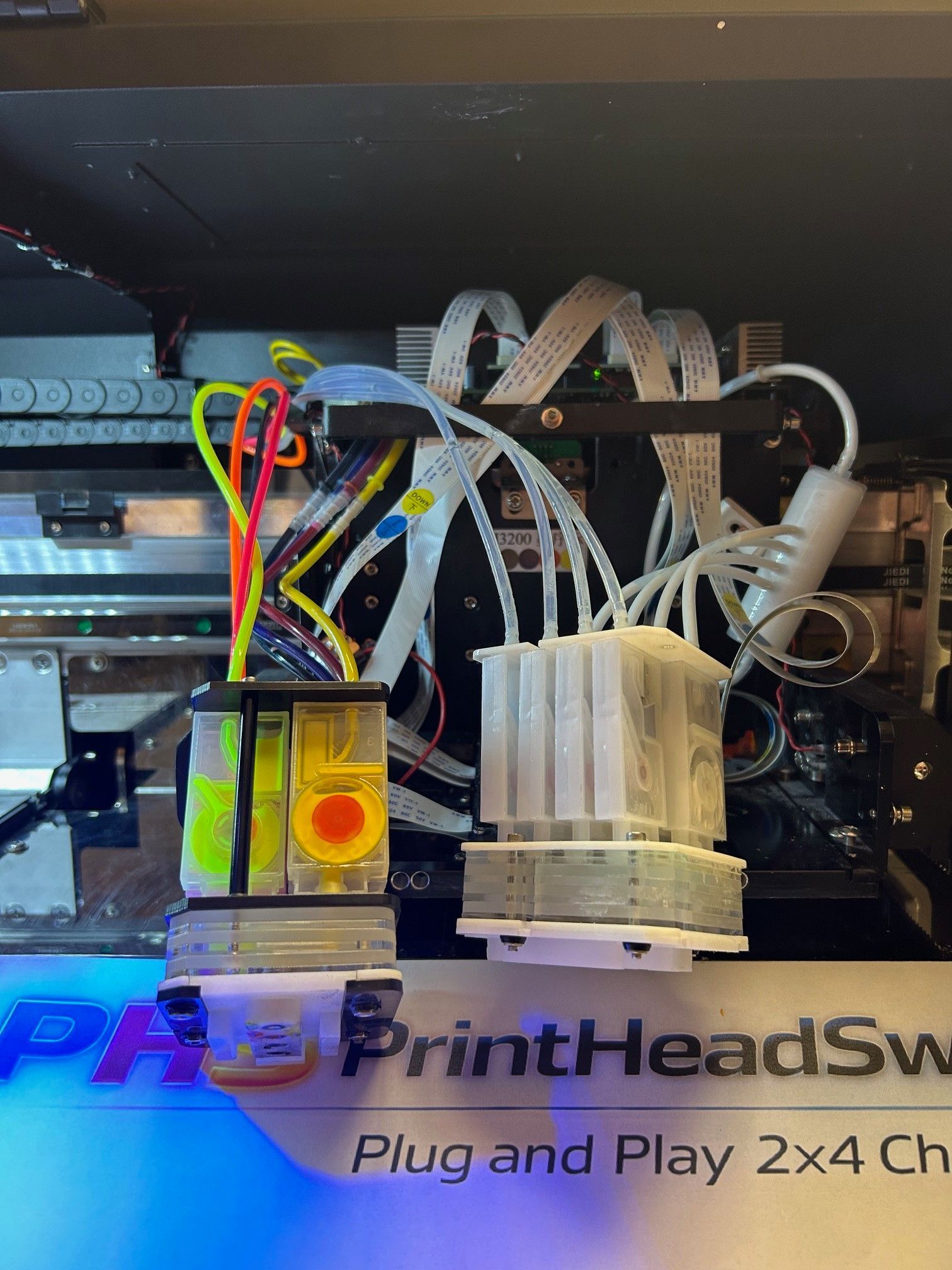
Process flow
01. Switching from pigmented to pigment-free ink
02. Pigment-free ink is based on the exact chemical basis of pigment ink.
03. This eliminates any reactions in the printhead.
04. Pressure of a rinse/cleaning field
05. Alternatively, conventional flushing via the Cap Station (Purgen) is possible.
06. For a 4-channel printhead, approximately 10–15 g of pigment-free ink is required (cap flushing).
07. White pigments / pigments such as TiO2 are gently flushed or printed out of the print head.
Conservation & Efficiency
8. No harsh cleaning cycles necessary
9. No stress / no mechanical strain on the printhead
10. Extremely reduced ink consumption in the maintenance process
11. At least 50% less ink waste than with conventional cleaning processes.
Added benefits: pigment-free ink (printing application & function)
12. Flushing medium is printable
13. Also serves as a preservative for the printhead.
14. Pigment-free
15. Cleaner-free
16. Environmentally friendly in use
17. Suitable as a transparent underlayer
18. Ideal for printing on light-colored textiles
19. Supports a soft touch and natural look
Printhead preservation
20. Pigment-free ink preserves the printhead
21. Protection for downtime of at least 7 days
22. No additional moistening of the printhead is necessary.
23. No rinse cycles required when switched off.
24. Reduced maintenance effort during machine downtime
Lifespan & Pigment Management
25. Prevention is better than aggressive cleaning later.
26. Preventive pigment management instead of reactive deep cleansing
27. Daily removal of pigments from the printhead
28. Daily fresh cleaning of the printhead
29. Without aggressive cleaners
30. Without drying white pigments in the system
31. Without stressing the nozzles by suction at the cap
32. Significantly extended printhead lifespan
33. No drying out of white pigments in the head
34. No clumping of pigment residues
35. No deposits from white pigments / TiO2 pigments
36. Consistent nozzle performance and pressure stability
Environment & Consumption
37. Extremely low overall ink consumption
38. Significantly reduced environmental impact
39. No TiO2-containing white ink is required to keep the printhead moist.
40. Less maintenance ink = less disposal effort
41. Resource-efficient printing operations
Ink system & switching technology
42. No mixing of inks in the ink system
43. No mixing in hoses or dumpers
44. Each channel has its own separate ink supply.
45. Clear media separation between pigmented and pigment-free ink
46. Reliable switching without system residue
47. No air entering the ink system
48. Closed system during switching
49. Media channels are switched in a controlled manner
50. Inactive media page locked in dead space
51. Alternatively, each opened to its own dumpers
PHS – Practical example of ink switching CMYK / spot colors transparent DTF
System configuration (example)
Example 1: 2-head printing system
02. Equipped with two i3200 pressure heads
03. 1 x Weisskopf (i3200)
04. 1 x CMYK head (i3200)
05. Both pressure heads equipped with PHS
06. Plug-and-play integration without mechanical modification
Ink configuration
07. CMYK head operated with switchable ink sets
8. Switching between standard CMYK and, for example, special colors such as neon inks is possible.
09. Weisskopf also switchable via PHS
10. Switching between white and transparent is possible.
Production capabilities
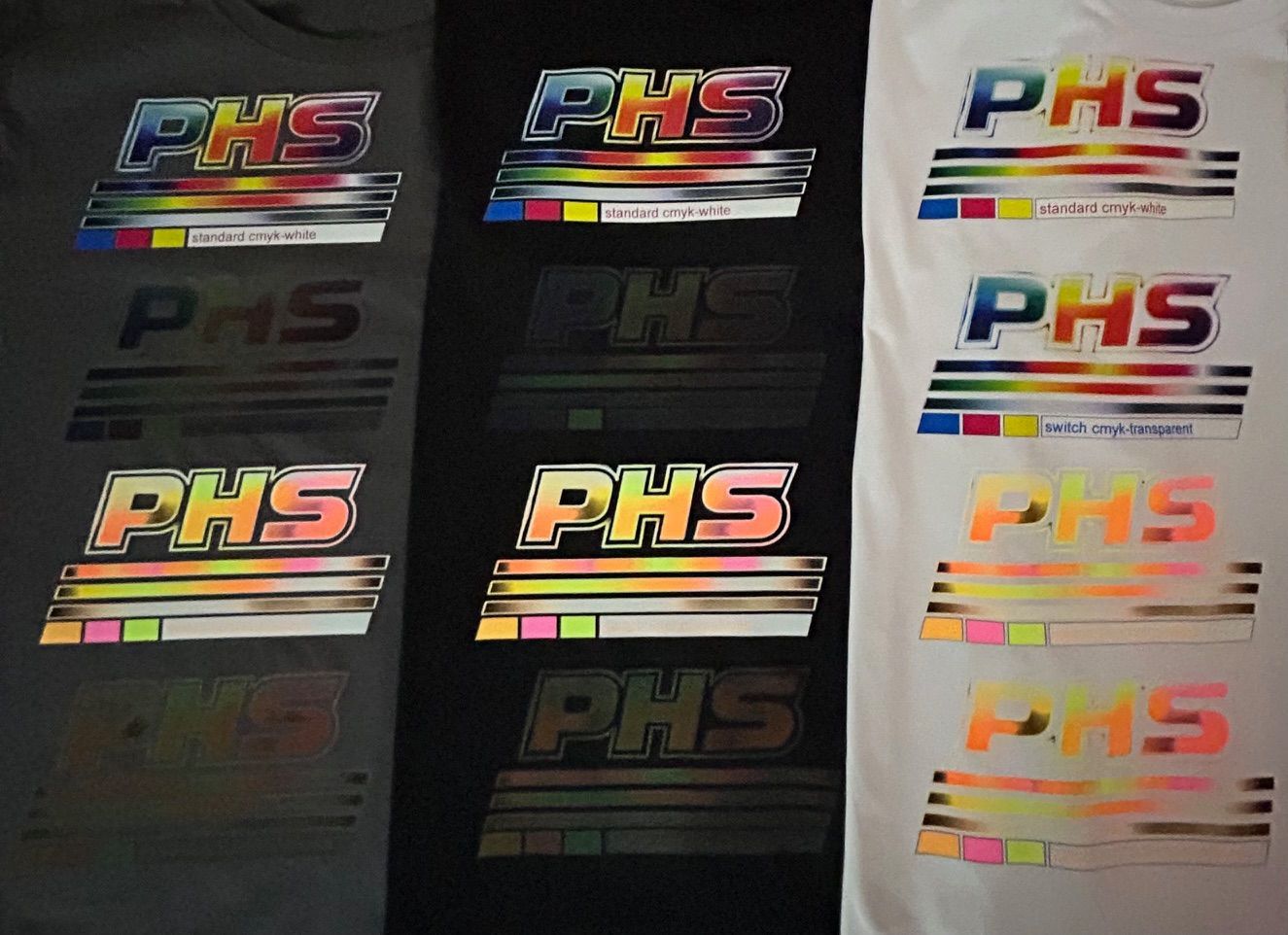
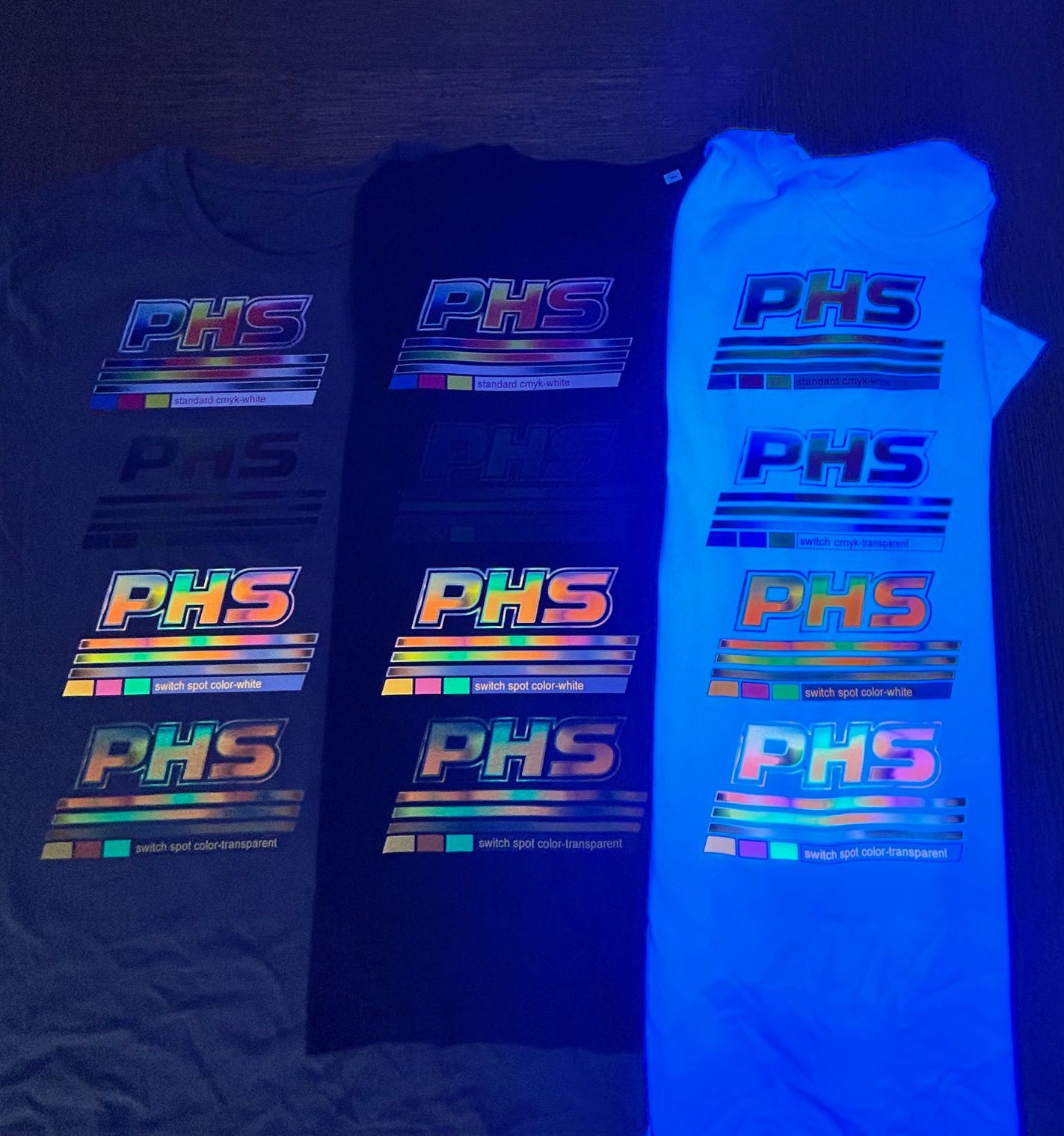
11. CMYK mode white
12. Neon mode White
13. CMYK mode Transparent (switched via the whitehead)
14. Neon mode Transparent (switched via the Weisskopf)
15. White or transparent depending on the circuit on the whitehead
16. Flexible combination depending on the order (CMYK or Neon) (White or Transparent)
DTF Example – Layer Structure – Adhesive Powder
17. Hotmelt - Pigment ink or pigment-free ink - Color
18. It bonds the paint layer and the textile fiber
19. The colored layer (white or transparent) serves as a receiving layer for the adhesive powder.
Role of white pigment ink
20. White pigment ink is not only used for opacity.
21. It also functions as an adhesive powder carrier.not
22. The powder adheres to the wet pigment ink.
23. Also technically usable on light-colored textiles and without alternative to PHS in the widely used DTF printing process.
Alternative: Pigment-free transparent ink
24. Pigment-free transparent ink performs the same function.
25. It also serves as a receiving layer for the adhesive powder.
26. Without TiO2 pigments in the layer structure
Technical advantages of transparent (DTF – light textiles)
27. No hard TiO2 pigments under reduced pressure
28. Softer overall structure of the transfer and better adhesion, as no pigments block adhesion.
29. Higher color reflection from the textile
30. Neon colors glow more brightly on light-colored fabric (under UV light)
31. Reflection occurs directly from the white fabric.
32. No attenuation due to TiO2 white layer
System and production advantages
33. Maximum flexibility, retrofittable for existing systems
34. Multicolor workflows without hardware replacement
35. Rapid switching between production types
36. Extended color gamut on a compact system
37. Economic use of existing printing technology
PHS – Integration, Service & Hybrid Benefits
Integration basis
01. Plug-and-Play Integration
02. No intervention in the machine's electronics is necessary.
03. No modification of the software or firmware is required.
04. Machine control remains unchanged
5. The manufacturer's warranty for the machine remains unaffected (depending on integration).
Mechanical system architecture
06. Mechanically analog switchable
07. Media switching purely hardware-based
8. No digital signal modification required
9. Independent of RIP or printing software
10. The system functions regardless of the manufacturer.
Installation and retrofit advantages
11. Can be retrofitted into many existing printing systems
12. Integration without major restructuring
13. Short installation times
14. Can be restored to its original condition
Service & Maintenance Module
15. Can also be used as a service module
16. Technicians can attach the module directly to the printhead.
17. Cleaning can be printed via additional channels.
18. Use of cleaning fluid via the pressure system possible
19. Targeted flushing of individual channels
Service benefits in use
20. Test print possible immediately after switching.
21. No need to dismantle dump trucks
22. Without removing ink tubes
23. Reduced service costs
24. Faster on-site maintenance processes
Operational and production safety
25. No influence on print data processing
26. No change to the color profiles is necessary.
27. No software compatibility risks
28. Process-stable switching at the hardware level
Strategic benefits
29. Machine-independent platform solution
30. Usable in different printing system classes
31. Future-proof with software updates
32. Reduced integration risk for OEMs
33. Ideal for modular machine concepts
Hybrid printing system
34. The PHS turns a printer into a hybrid printer.
35. Combining multiple ink and printing applications in one system